
How AI assistants decide which local business to name first
ChatGPT, Claude, Perplexity and Google's AI Mode each read different signals before they recommend anyone. Here is what they read, and the four ways a local business can build those signals.


- AI assistants lean on reviews, directories and a business's own site before they name anyone
- Each assistant reads differently: ChatGPT prefers official pages, Claude and Perplexity lean on directories, Google's AI Mode leans on Reddit, YouTube and LinkedIn
- Four routes exist: do it yourself, a peer, a consultant, or a platform
- A business on the directories, with a LinkedIn presence and a plain page on its own site is readable by all four assistants
A local service owner asks an AI assistant who to call in their town, and it names a competitor. The tools are not guessing. They read signals a business builds over time, reviews, directory listings and the business's own site, before naming anyone. Those signals can be influenced, and the work fits into four routes: doing it yourself, hiring a peer, bringing in a consultant, or using a platform.
What AI assistants actually read
A study of 1,931 answers across ChatGPT, Claude, Perplexity and Google's AI Mode, collected by Forty Questions, kept every page the four assistants cited: 19,698 citations from 3,536 sites. The four read very different things. Claude and Perplexity lean on software directories, with 1,022 citations between them going to G2, Capterra, SourceForge and GetApp. Google's AI Mode leans on Reddit, YouTube and LinkedIn. ChatGPT cites few pages and prefers official ones: vendors' own sites, government pages and product documentation.
A second study points the same way for reviews. Seranking analyzed 30,000 commercial keywords and tracked 23 review platforms inside Google's AI Overviews. Five platforms took 88 percent of all review-platform links: Gartner Peer Insights at 26.0 percent, G2 at 23.1 percent, Capterra at 17.8 percent, Software Advice at 12.8 percent and TrustRadius at 8.3 percent. Clutch appeared more often for consulting firms and B2B services.
Both studies cover software and B2B categories, not a single insurance agency or estate planner. The pattern still matters to a local business: the assistants do not pull from one master list. They pull from pages that already exist, and a business that appears on directories, has a LinkedIn presence and keeps a plain page on its own site is readable by all four. One that exists only on its own site is readable mainly by ChatGPT.
Who this guide is for
This guide is written for owners of local and regional service businesses: insurance agencies, estate planners, mortgage brokers, real estate agents, attorneys and similar lines of work. Most serve one area, and a five to ten person business is common. It is not written for national brands, e-commerce stores or anyone competing on a generic product rather than a local reputation.
A local business has one advantage the studies imply. An assistant naming a business in one town only has to be convinced by a handful of signals against a handful of competitors. The four assistants in the Forty Questions study cited between 3.9 and 20.7 pages per answer. A local business does not need to be everywhere, it needs to be in the few places its own town's question reaches.
Start this week: read your own answer
- 01Ask the buyer's question
Open ChatGPT, Claude, Perplexity and Google's AI Mode and ask each one who to call for your service in your area.
- 02Open the source list
Every answer now carries a list of the pages it cited. Note which reviews, directories and sites it used.
- 03Ask on three days
The source list changes, so repeat the question on three separate days and keep the pages that appear more than once.
- 04Check your own pages
Confirm your site states what you do and where, in plain words, and that your directory listings and LinkedIn presence match it.
- 05List the gaps
Write down every cited page where a competitor appears and you do not. That list is the work.
The four routes
The routes differ in who does the work and how much of the owner's time it takes. Lucidflow's comparison of DIY work against consultants found the two are not interchangeable: platforms and self-directed work are fast at producing diagnostics, while consultants are strong at stakeholder work, industry depth and sustained attention on one program. A local business usually needs less than all of that, which is why the choice matters.
- Do it yourself You claim and fill the directory listings, gather reviews and rewrite your site. Costs no money, only your hours, and the owner of a five-person agency has few spare ones. It suits an owner who already knows what makes their business different and can write it plainly. Weak at consistency: the work slips the first busy week.
- A peer An employee, a family member or another business owner trades help. Faster than DIY and free or near it, but it inherits the peer's blind spots, and an untrained writer can state a service the business does not actually offer.
- A consultant A local SEO or marketing consultant runs the whole effort. Strong at strategy and sustained attention, and the trade-off is money and the dependence on one person's availability. Vetting matters: ask what they will change on your site and what they will measure.
- A platform Software and AI-assisted services draft pages, answers and articles from what the owner says. Fast and cheap per page, but generic tools write from what they find elsewhere, which is the same material your competitors give them. Check that anything published is grounded in your own words.
No route needs a contract to test. The DIY version of the five steps above costs nothing but an evening. A consultant or platform can be trialed on one page, one listing or one recorded conversation before any wider commitment.
Where a specialist fits
One gap shows up in the DIY and platform routes: both need the owner's own words before anything good gets written. The tools can draft, but only after someone states what makes the business different. Earned exposure is a service built around that gap. The work is 10 percent one recorded conversation with the owner, 80 percent AI drafting pages, answers and articles only from what the owner said, and 10 percent the owner approving every word. It works by application, and its founder TJ Larkin owned a local $9 million insurance agency before this. It is one option among the four, not a replacement for reading your own answers first.
Questions people ask
Can this be done free?
How long does it take?
Do I need a consultant?
Which assistant should I care about?
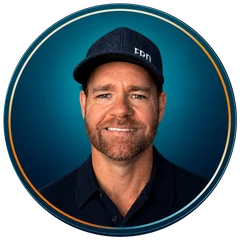
TJ Larkin owned a local $9 million insurance agency and saw how hard it is for a good local business to stand out. He founded earned exposure to help local businesses get found on Google and named by AI.